




When it comes to investing, it is often not the markets, but emotional decisions and common misconceptions that cost private investors returns.
“The investor’s chief problem is not the bank, which charges excessively high fees, but the investor himself,” said Benjamin Graham. Graham was a well-known economist, a legendary investor – and the teacher of Warren Buffett.
Graham’s assessment has now been confirmed by behavioural economics, a newer branch of economics: investors stand in their own way. Behavioural economics studies have shown that irrational investment errors can lead to annual return losses of up to 6.5% – losses that are compounded over the long term. Below we show you the three most common investment traps and give you specific tips on how to avoid them.
1. Security illusion: money in a savings account does not protect against losses
“Investing in equities is far too risky – I prefer to leave my money in a savings account.” Have you ever found yourself believing that thought?
Many people believe that their money is only safe in a savings account. A savings account with a Swiss bank offers a deposit guarantee which offers customers increased protection up to a maximum amount of CHF 100,000 in the event of a bank failing. And: the money in your savings account is not subject to fluctuations. But this supposed security can be deceptive. Inflation causes the purchasing power of your savings to dwindle, especially when interest rates are low. Between 2002 and 2022, the average annual return on cash was 0.1%, while inflation was 0.5%. This means a real loss in value of your assets.
By contrast, equity investments offer attractive potential returns over the long term. Swiss equities, including dividends, generated an average annual return of 6.9% between 1997 and 2021 – i.e. significantly more than a savings account. Stock exchanges are also not casinos, even if short-term price fluctuations may suggest so. Rather, stock exchanges have an economic function, financing companies and enabling investors to participate in and benefit from the added value of an economy. If you don’t allow yourself to be unsettled by price swings and changes of mood and have a long-term investment horizon, you have significantly higher potential returns than a savings account.
Tip: Instead of putting your capital in a savings account, you should consider a diversified investment strategy tailored to your individual goals and risk appetite.
Tip
Get an insight into our pensions and financial expertise in a free initial consultation: we can help you gain clarity about your wealth situation and answer important questions about your financial future.
2. Timing trap: there's no such thing as the right entry point
“I know when to buy: when profits attract. If losses are imminent, I sell equities again.”
Some investors resort to this supposedly simple strategy – and overestimate their abilities. After all, what sounds simple in theory is something only a few private investors succeed in doing in practice. Market timing is hardly successful even for professionals. Studies show that investors who try to time the market often miss out on the best days and suffer significant return losses as a result. Instead, it has been shown that investing continuously over a longer period – irrespective of short-term market fluctuations – leads to better results.
Tip: If you invest regularly instead of just investing a large amount once, it is easier to smooth out market fluctuations – the easiest way is with a fund-based savings plan that also allows you to benefit from the cost averaging effect.
Missed trading days cost returns
“The following data from the financial services provider Bloomberg for the period between 04.01.1999 and 30.05.2025 illustrates this:
- The value of an investment in a Swiss equity basket (SPI Index) increased from CHF 100,000 to CHF 362,000 (+262%) if the capital remained invested at all times.
- Investors who were not always invested and missed the 10 best trading days posted a much smaller increase in value to CHF 197,000 (+97%).
- Those who missed the 40 best trading days even had to accept a decline in value to CHF 59,000 (-41%).”
In other words: a few days of high profits can have a disproportionate impact on returns.
3. Home bias: The risks of a lack of diversification
Not putting all your eggs in one basket is also a sensible maxim when investing. Economists talk about diversification. However, in practice, reason can be quite tricky: failing to diversify investments i.e. by country, sector or asset class such as equities, bonds or real estate, is a mistake many investors make.
Swiss investors in particular often fall into so-called “home bias”: They prefer to invest in Swiss companies than in foreign ones because they believe they know them better. As a result, they miss out on returns, as the Swiss equity market is rather defensive with pharmaceuticals and consumer stocks, while technology stocks with more risk and price potential are traded on the Nasdaq US stock exchange. People would be better advised not to give preference to any country, sector or investment theme from the outset, but to spread the capital broadly – in accordance with their investment objective, which is different for everyone. As institutional investors such as pension funds have been doing successfully for a long time.
Tip: Review your investments regularly and ensure that your portfolio is balanced and broadly diversified in order to minimise risks and maximise opportunities.
Swiss equities in a long-term comparison
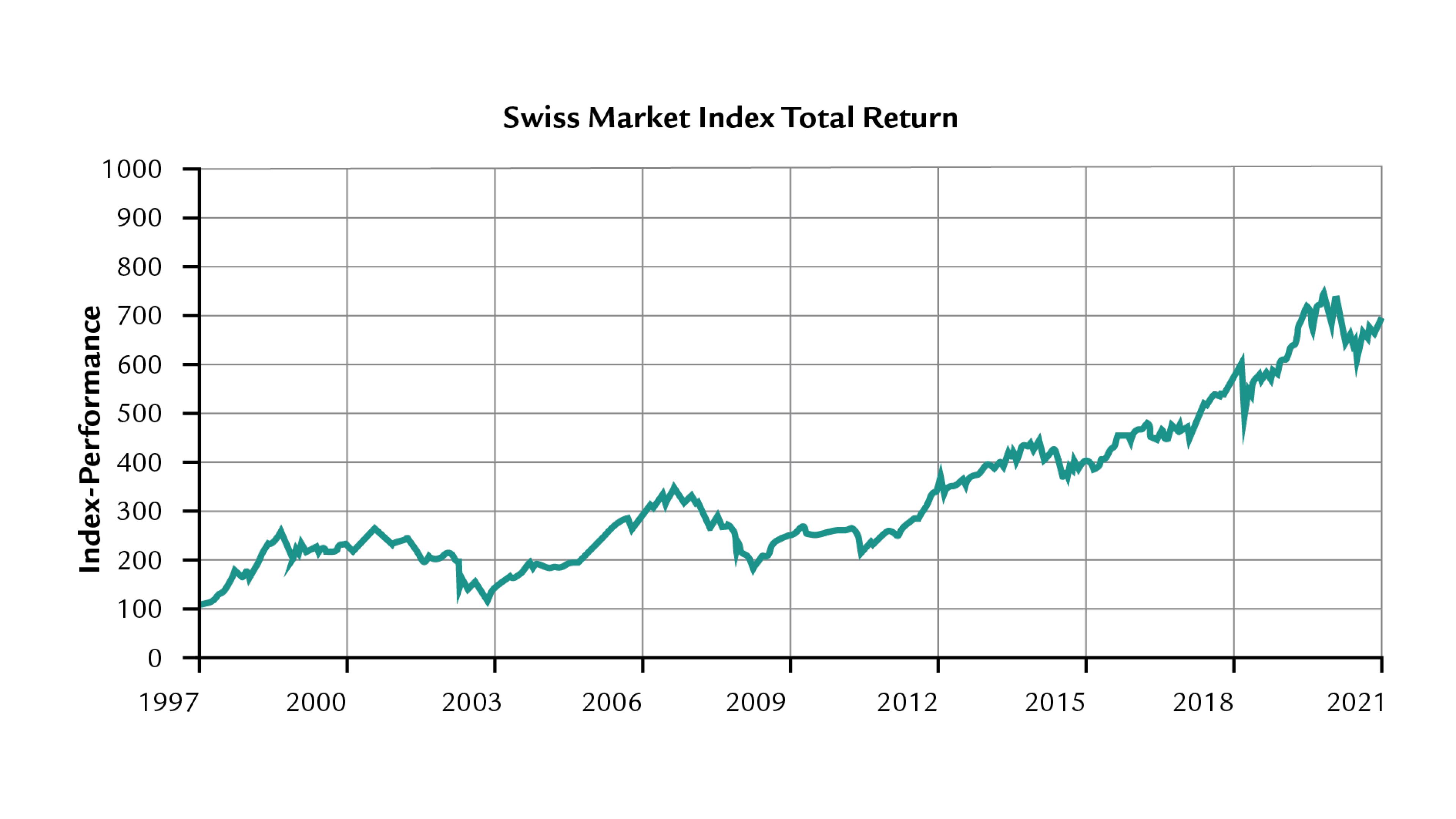
Chart 1: The Swiss Performance Index (SPI) is the overall market index for the Swiss equity market. It contains almost all equity securities of companies based in Switzerland or the Principality of Liechtenstein traded on SIX Swiss Exchange.

Tobias Kipfer
Wealth Planner
Tobias Kipfer is Team Leader and Wealth Planner at Swiss Life Wealth Managers in Winterthur. He specialises in long-term financial planning and individual wealth management for his clients. After completing his Bachelor's degree in Business Administration at HSG St. Gallen, he completed an internship in Financial Consulting and Wealth Management and trained as a financial expert.