



With traditional investments, the investment portfolio is geared to the investor’s risk tolerance and capacity, time horizon and experience. What usually falls by the wayside is the actual goal they are looking to achieve with the investment.
“How do you react to losses on the stock market? What returns should your investments generate? How much do you know about financial topics?” These are usually the questions that potential investors are asked to help them determine their investment strategy. In most cases, they can only choose from standardised financial products with generic strategies. However, the key questions to ask when defining the ideal investment strategy are as follows:
- What goals do I still want to achieve in life – and by when? For example, when would I like to retire? Do I want to support my children? Or buy a home abroad? Do I want to go on a trip around the world?
- How much risk do I have to take to achieve these goals?
This is precisely the basic principle of goal-based investing, which represents a new and different approach compared to the traditional approach. The aim here is to only take as little and as much risk as necessary when striving to achieve personal financial life goals – but no more and no less, even if the personal risk profile theoretically allows it.
That’s why the right level of risk is key to achieving your goals
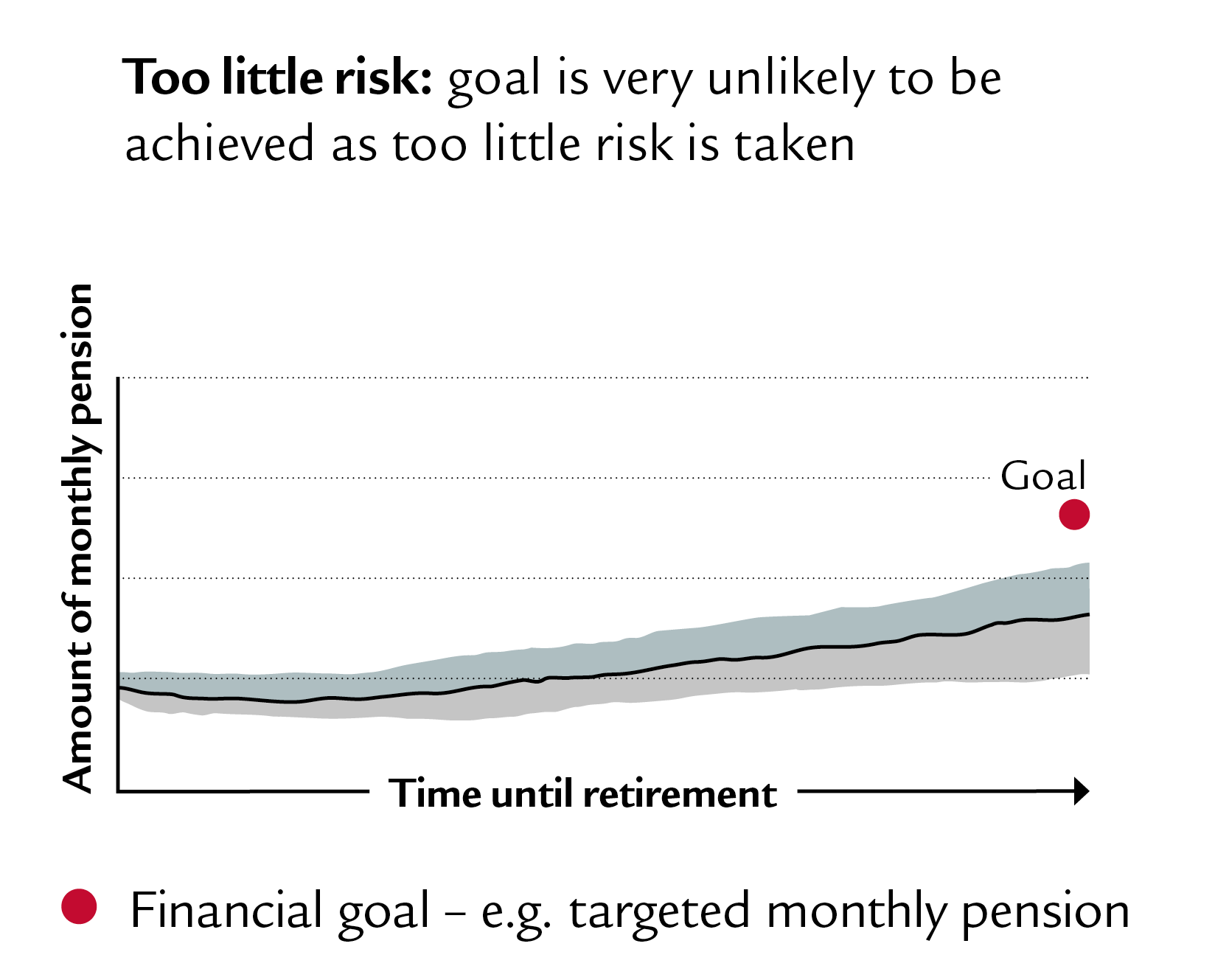
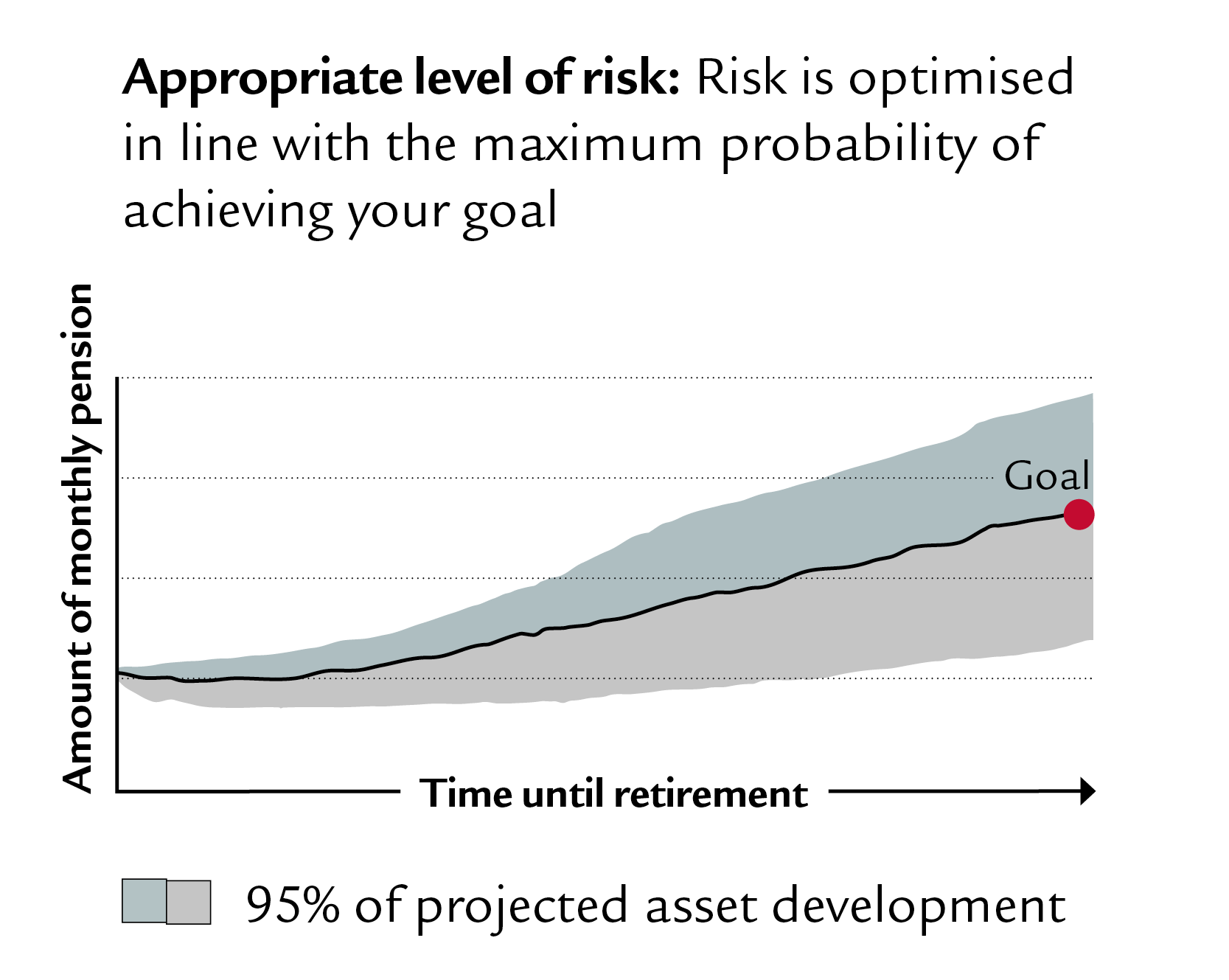
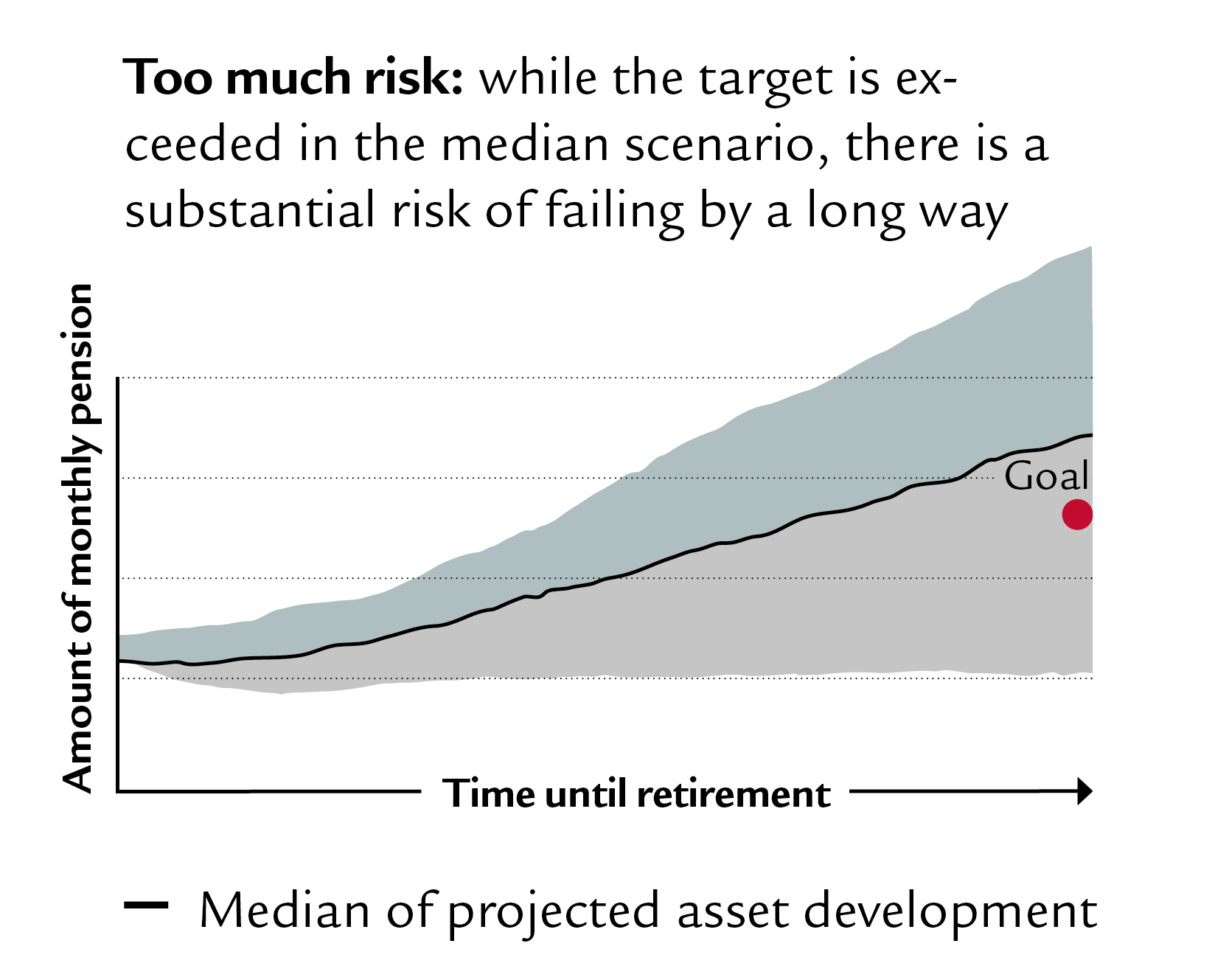
A successful investment strategy always starts with your own goals
To determine a successful investment strategy, you therefore need to start by addressing the question of your own goals. These are as different as your ideas of life: do you want to go on a round-the-world trip in ten years’ time, which is expected to cost CHF 30 000? Do you want to help your children finance their own home, for example with CHF 50 000? Or retire early at the start of your 60s? Clearly defining your goals helps you determine the amount you need to save and the right investment strategy – and also gives you more motivation to invest in a disciplined manner.
Solution to suit a wide variety of life scenarios
Ideas about your future life are not only individual, but they also change over time. In order to cope with a wide range of scenarios at every stage in your life, solutions and strategies are therefore needed that are continuously reviewed and adapted to your current needs. Goal-based investing is therefore not a static process, but a constantly evolving one.
How goal-based investing works
Of course, defining your own goals is not enough – a holistic approach is particularly important when it comes to goal-based investing. Our financial advisors do the following:
- Define personal goals and an associated timeline
- Determine the available funds and desired liquidity
- Take into account any expected higher income and expenses
- Create a risk profile
- Determine an optimal investment strategy for achieving individual goals
- Select suitable asset classes
- Monitor and update the investment strategy on an ongoing basis
Why a holistic approach is important
A personal, goal-based investment strategy also takes into account an investor’s individual situation and needs. This includes a holistic view of their specific assets: Which form part of their capital assets, i.e. are liquid and investable, and which are tied and cannot be invested – such as an owner-occupied single-family home?
Five typical mistakes – and how to avoid them
Goal-based investing can quickly get off track. These are some of the pitfalls that we have often seen in practice:
- Goals are too vague: without a clear goal, even the best strategy is ineffective. Make your wishes specific.
- Expectations are too high: the markets do not just give you what you want. Realistic returns often take you further than making risky bets.
- Constantly reallocating investments: always changing things? This usually costs more than any benefits the change will provide. Keeping a calm head is a good idea.
- Trusting your gut feeling and not your plan: emotions are part of life – but should not be part of an investment strategy. Stick to your plan. You can find out more about the main psychological mistakes when investing and how to avoid them here.
- Not readjusting your goals: your life can change – and so should your strategy. Regularly reviewing your strategy helps you stay on track.
A structured approach makes the key difference
A personal, goal-based investment strategy takes into account an investor’s individual situation and needs. This includes a holistic view of their specific assets: which form part of their capital assets, i.e. are liquid and investable, and which are tied and cannot be invested – such as an owner-occupied single-family home? But selecting the right investment instruments, implementing your strategy, diversifying and regularly reviewing your portfolio are also success factors in implementing your strategy.
A discussion with a financial advisor can help you better organise your finances and build your wealth in line with your financial goals. We would be happy to advise you personally in a free, no-obligation initial consultation.

Olivier Köng
Wealth Planner
Olivier Köng is a wealth planner at Swiss Life Wealth Managers in Zurich. He received his bachelor’s and master’s degrees in business administration from Keiser University in Florida. While working as a management consultant in the US, he gained valuable experience in the areas of financial planning, corporate strategy and advising clients. Today he develops customised financial plans and asset management services for his clients.