


On 24 September, the Swiss National Bank (SNB) decided to leave the key interest rate at zero percent. We provide an overview of the key questions surrounding the SNB’s current monetary policy: what does the zero interest rate mean for property owners, savers and investors? And how are interest rates expected to develop over the rest of the year?
What is the key interest rate?
The key interest rate is a monetary policy instrument and is set by the central banks. It serves as the general basis for interest rates and indicates the interest rate at which commercial banks can borrow money from the central bank.
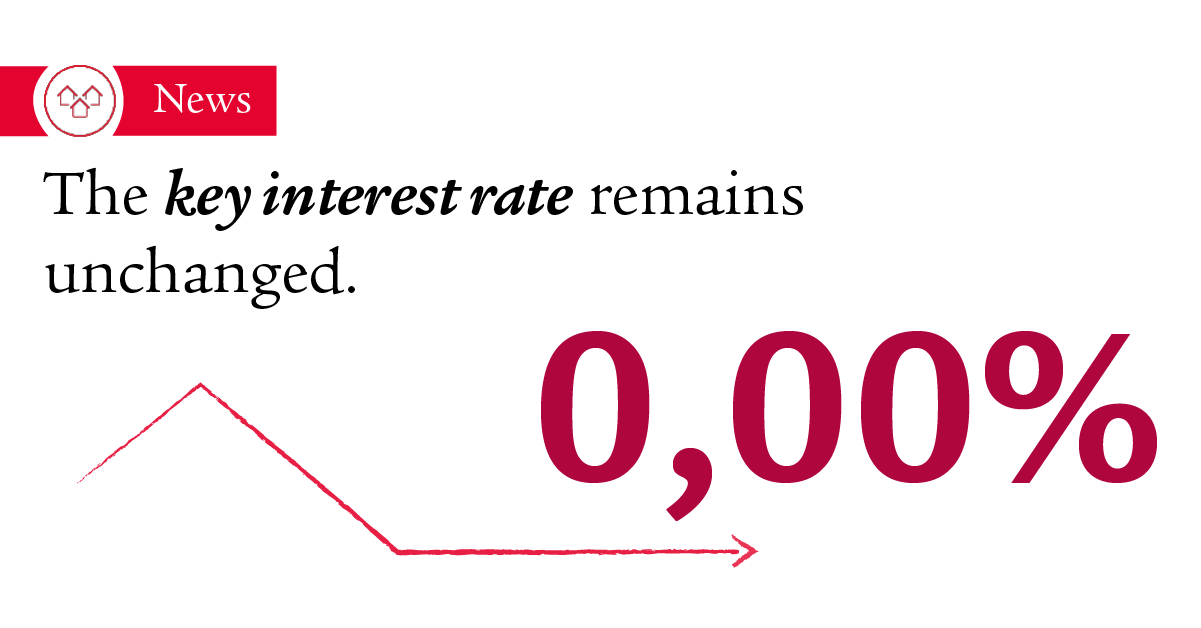
As expected by the market and Swiss Life’s economists, the Swiss National Bank (SNB) left its key interest rate unchanged at zero percent at its latest monetary policy assessment on 24 September 2026. It is therefore continuing its “zero interest rate policy”, which has been in force since June 2025. This was despite the surge in annual inflation to a surprisingly high 0.8% in August, from 0.4% in July. However, inflation is still within the range of 0 to 2% set by the SNB. There is therefore no foreseeable turnaround, especially as the rate of inflation in Switzerland remains one of the lowest in the world Monetary policy is unlikely to normalise before next year.
Who is affected by changes in the key interest rate?
Regardless of whether the key interest rate is cut, raised or maintained at the same level, it affects not only the Swiss economy but also private individuals. The key interest rate is particularly relevant for mortgage holders, people with savings capital and those who invest their money. For each of these three categories, we have compiled the answers to the most important questions about the key interest rate here.
What is likely to happen as regards the key interest rate?
Swiss Life currently expects the SNB to leave the key interest rate unchanged until at least the end of 2026 and that it is likely to slowly start raising it in 2027.
What does the zero interest rate mean for savers?
During periods of low interest rates, savers lose out. If the SNB key interest rates are low or zero, short-term market interest rates will also be low. Banks can already borrow money cheaply and do not have to pay savers high interest rates on their savings accounts because they are only dependent on their capital to a limited extent.
If interest rates on savings capital are lower than the inflation rate, savers may even lose purchasing power.
Can investors benefit when interestrates are low or zero?
A person who invests their money instead of leaving it in a savings account can benefit in different ways from the persistently low key interest rates in Switzerland, depending on the asset class:
- Equity markets: low interest rates tend to boost equities as future earnings are valued more highly. In addition, equities often react positively to key interest rate cuts, as they lead to higher company valuations and low interest rates make financing more attractive for companies.
- Bonds: when zero interest rates prevail, new bonds tend to have low interest rates and high valuations. As a result, the regular yields on them are low. People who already own bonds can benefit from interest rate cuts as their existing bond investments gain in value.
- Real estate investments: the picture is also positive for real estate investments, as lower financing costs can increase the demand for real estate. We explain the specific situation for mortgage holders in the next section.
- Precious metals: investments in precious metals such as gold, silver or platinum can become more attractive when interest rates are low. They do not earn interest themselves, which means that the opportunity loss compared to fixed-income investments decreases when interest rates fall.
The extent to which the prolonged interest rate standstill will affect you depends on your situation in life and your financial decisions. In any case, the fact is that traditional saving is becoming less and less worthwhile in light of current developments. The more key interest rates in Switzerland fall or remain at a low level, the more attractive it becomes to invest.
How do zero interest rates and key interest rate cuts affect mortgages in Switzerland?
Mortgage interest rates are largely influenced by the key interest rate. This is because it determines both the financing costs for banks and expectations on the capital markets. Changes in the key interest rate therefore have a direct impact on SARON mortgages and indirectly on newly concluded fixed-rate mortgages. Interest rates for fixed-rate mortgages are currently moving sideways at a low level. With Swiss Life, you can extend your expiring mortgage early up to 18 months prior to the end of the term. The interest surcharge for early extensions is still very low for many terms.
Whether you can benefit from key interest rate cuts or low interest rates depends primarily on the type of mortgage you have taken out:
- Fixed-rate mortgages: existing mortgages remain at the interest level at which you concluded them, unless you restructure your debt. If you take out a new fixed-rate mortgage, you can benefit as the banks can offer lower interest rates.
- SARON mortgage: key interest rate cuts are good news for people with SARON mortgages. After all, SARON mortgages are linked to short-term interest rates, which correlate closely with the SNB key interest rate. As a result, interest rates on these have also fallen gradually in recent months. However, many institutions do not offer negative SARON rates, limiting the potential for further interest rate cuts on SARON mortgages. If the SNB maintains zero interest rates over the medium to long term, interest rates for SARON mortgages should also move sideways.
Should I wait before extending my mortgage?
Swiss Life expects long-term mortgage interest rates to rise moderately in 2026. If this forecast proves correct, now could well be a good time to extend your mortgage.
How can I extend my mortgage early?
Most banks and insurance companies offer an early extension of mortgages between six and 24 months before maturity. To extend it, you take out the new mortgage on a specified date, thereby securing the current interest rate, regardless of how high or low the interest rate is on the maturity date of your mortgage.
New mortgages: what types are currently recommended?
Mortgage interest rates are currently bottoming out. Swiss Life expects them to increase moderately over the course of the year. So why not take out a fixed-rate mortgage and secure an attractive interest rate for the years to come? With a low-cost fixed-rate mortgage, you protect yourself against potential interest rate rises throughout the term and can plan your future with certainty without having to deal with potential interest rate adjustments.
However, the question of what is the most suitable type of mortgage also depends heavily on your risk appetite and financial resources:
- If you value security, stability and predictability or only have limited financial leeway, a long-term fixed-rate mortgage is usually a good option.
- If you think that mortgage interest rates will continue to fall and you can easily withstand financial fluctuations, a shorter term and the addition of SARON mortgages may be worthwhile. A word of caution, however: many institutions do not offer negative SARON rates. Accordingly, the potential for further interest rate cuts for SARON mortgages is limited.
What else should I keep in mind as a mortgage holder?
It is always a good idea to get a personal consultation on the topic of mortgages. Swiss Life experts will walk you through every market situation and support you throughout the entire financing process, offering expert advice on residential property and mortgages – so that you can fulfil your dream of owning your own home in a financially self-determined manner.
Arrange a consultation now
We will explain the pros and cons of SARON, fixed-rate and green mortgages in a consultation and determine which product and term best suit you and your financial needs.