


How much will my pension be when I retire? And how can I best provide for old age? Do I have gaps in my contributions? Many people wonder whether they are financially prepared for retirement. Here we share some tips on planning for retirement and reveal how you can start providing for the future now in order to lead a financially self-determined life in old age.
How much will I have
after retirement?
A survey conducted by Swiss Life shows that only about half of those approaching retirement know how much money they will have when they retire. This shows how important it is to address the issue of retirement at an early stage and draw up a comprehensive individual plan.
Pensions are based on the Swiss three-pillar system, which is enshrined in the Swiss Federal Constitution. Under this system, the idea is that AHV/AVS and occupational provisions together provide around 60% of a person’s final salary as a pension – especially for people with low to middle incomes. This amount is
then supplemented via private provisions (3rd pillar), which can strengthen financial self-determination in old age. The actual amount of a person’s pension, however, depends on factors such as their income, contribution period and any gaps in coverage.
Would you like a consultation?
We’ll show you how to best plan your retirement.
Retirement planning:
specific measures
In order to enjoy your retirement without worrying about your finances, it is important to plan your retirement at an early stage. You can start today by implementing effective strategies to secure your financial future. The following steps will help you create a solid foundation.
Create a budget
A well thought-out budget is the key to a financially self-determined future. First, compare your regular income with your fixed expenses and make a note of your assets. Set clear savings targets and determine how much money you want to set aside for them each month. This kind of plan will help you define your
financial priorities and track your progress.
Take advantage of pillar 3a
Pillar 3a is a form of tax-qualified private provision. It makes it possible to accumulate capital for retirement while saving on taxes at the same time. Money paid in can be deducted from your taxable income, as long as the income youearn is subject to AHV/AVS contributions.
For aktuelles-jahr, the maximum pillar 3a amount is abzug-3a per year for people with a pension fund. People without a pension fund (e.g. the self-employed) can pay in 20% of their earned income, up to a maximum of abzug-3a-selbststaendige per year.
Explore the possibilities of pillar 3b
Pillar 3b is also an element of private provisions and, together with pillar 3a, constitutes the third pillar. It provides a flexible way of saving for retirement that is not tied to the time of retirement, and can be used for
various savings targets. Types of investment include savings accounts, bonds,equities, investment funds, structured products and insurance policies.
The advantages of pillar 3b include:
- The opportunity for every person resident in Switzerland to make contributions
- Free choice of beneficiaries, date of payout and how the savings are used
- No annual maximum amount
There are no direct tax advantages as with pillar 3a, but certain investments, such as capital-sum insurance with a surrender option, may be tax-privileged.
Voluntary purchases in the pension fund
Another effective way to plan your retirement is by making voluntary purchases in your pension fund. This will help you close any contribution gaps and increase your second pillar benefits. At the same time, you benefit from tax advantages as the payments can be deducted from your taxable income.
Good to know:
- Pension fund purchases are subject to a three-year blocking period: the money paid in may not be withdrawn as a lump sum during this period.
- The amount of the possible purchases is shown on your pension certificate and in the pension fund regulations
- Purchases only increase pension fund benefits, not AHV/AVS pensions.
A voluntary pension fund purchase can be a sensible step – provided it suits your personal circumstances and is carefully planned.
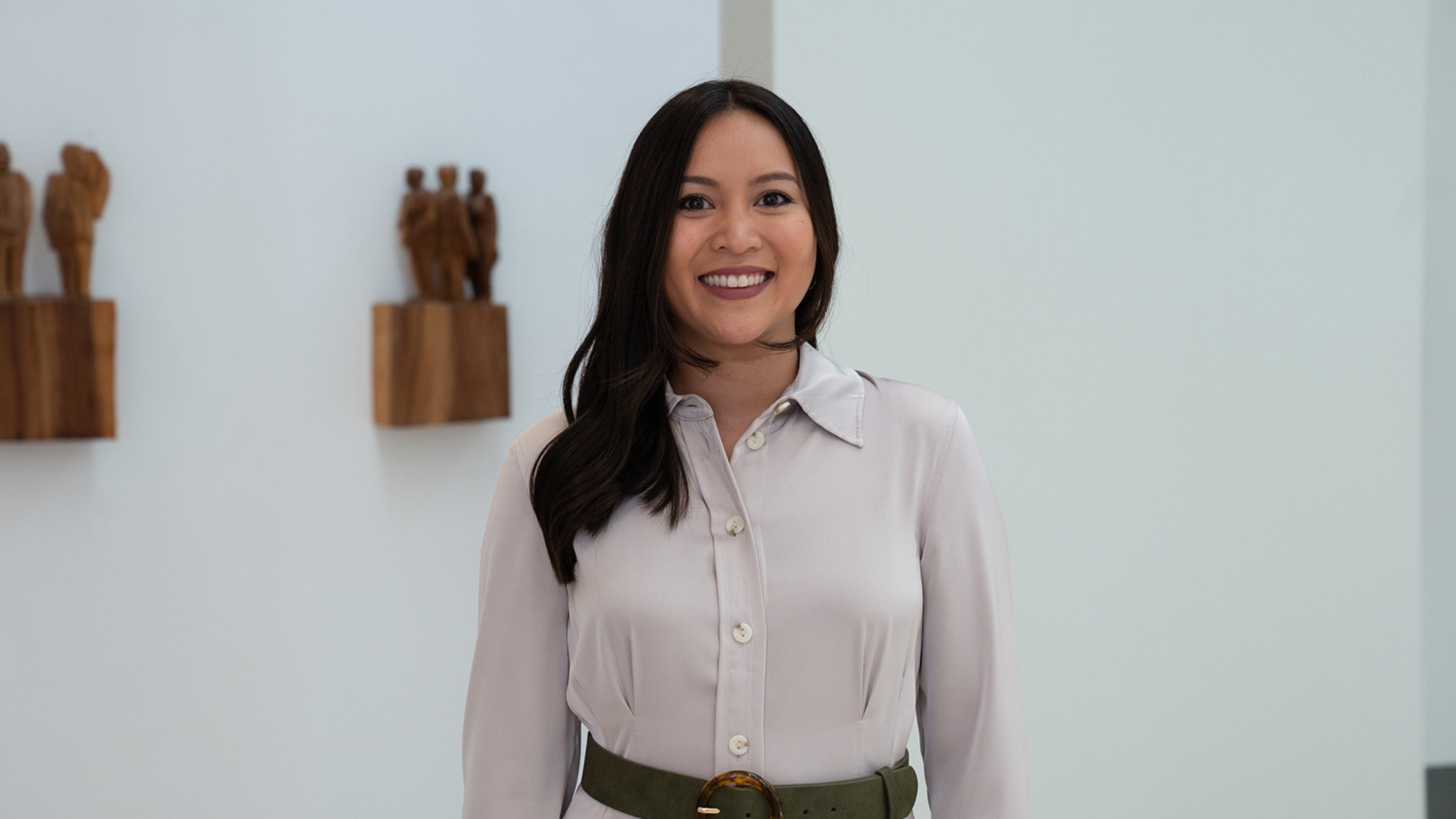
“As income generally rises over the course of your working life, this often results in contribution gaps. These can be closed by making voluntary purchases. Learnmore about the terms and benefits of these purchases.” (Huong Tran)
Pension fund purchase
Review your insurance policies
Regularly review your insurance policies regularly to make sure they meet your current and future needs. In addition to property insurance, this also includes life and disability income insurance. A prudent insurance strategy can offer you and your loved ones additional security in the event of unforeseen incidents.
Stay flexible
Your financial situation, goals and economic circumstances may change over time. An important tip is therefore to remain flexible and regularly review your pensionplans and adjust them if necessary.
Start planning your retirement early so that you can lead a carefree and financially self-determined life later. Any action you take today will help you do that.
Pension calculator
Use our pension calculator to assess your financial situation.
Dealing with contribution gaps
Contribution gaps can have a significant impact on your pension entitlements and lead to financial difficulties when you retire. Find out what causes these gaps and what measures you can take to close them effectively.
If you have gaps in your AHV/AVS contributions, you will receive a lower pension. Pensions are reduced by 1/44 for every year in which no AHV/AVS contributions weremade. Order an account statement from your social security administration office to check whether there are any contribution gaps in your individual account (IA).
Good to know: any shortfalls in contributions can be paid in retroactively for up to five years. Thereafter, the entitlement to any supplementary payment lapses.
How do contribution gaps arise?
Contributiongaps can arise for a number of reasons:
- Living abroad: Periods spent living and working abroad without paying AHV/AVS contributions.
- Short work assignments or part-time employment: Periods of low employment with no or minimal contributions.
- Raising children or studying: Periods out of employment because you were studying or caring for your family. Spouses can benefit, however, if the other spouse pays at least twice the minimum amount (offsetting option).
- Time spent out of work: Periods during which you were not working for other reasons and did not pay any contributions.
- Moving to Switzerland later in life: If you did not move to Switzerland until after the age of 21 and therefore started paying contributions later.
- Early retirement: If you retire before the reference age of 65 and no longer pay AHV/AVS contributions from that date, there will be a gap. It is advisable to continue paying in contributions during the period of early retirement until you reach the reference age.
- High salary: Check whether your salary is fully insured. In occupational provisions (BVG/LPP), the mandatory portion of the salary is covered up to zweite-saeule-maximum-jahreslohn (aktuelles-jahr). Income beyond this can also be protected through supplementary solutions – but this is not automatically insured.
What you can do to close contribution gaps
In order to secure your full pension entitlement, it is important to make up any contribution shortfalls. The following steps can help:
Request an account statement
Get a detailed account statement from your social security administration office. This shows what contributions have already been made and whether there are any gaps.
Make top-up payments
Missing contributions from the last five years can be paid in retrospectively to ensure you receive your full entitlement.
Check for exceptions
Special exceptions are granted for contribution gaps which arose before 1979. You should check whether these apply to your situation.
Claim for junior years
Contributions made if you were employed between the ages of 17 and 20 (so-called “Jugendjahre”) can compensate for a maximum of three missing contribution years after the age of 20. Please note: only AHV/AVS contributions actually paid from gainful employment are counted. Completing a degree alone does not count as contribution years – only if you worked on the side and paid contributions will this time be counted.
Pension review
A pension review gives you a precise overview of your financial situation in retirement. Swiss Life experts can help you develop a strategy to close pension gaps and improve your retirement provisions.
Factors influencing retirement assets today
Changes to your circumstances can have a significant impact on how much money you have in retirement. An awareness of these factors and proactive planning are key to ensuring financial security in old age.
Key eventsand their impact:
- Professional changes: Professional changes have a direct impact on your pension entitlement.
- Part-time employment / parental leave: Reduced working hours lead to fewer payments into your pension fund.
- Self-employment: Self-employed people are responsible for making their own arrangements for retirement.
- Early retirement: Taking early retirement can reduce your accumulated pension capital.
- Divorce: This can lead to the division of retirement savings and impact pension entitlements.
- Early withdrawal for home ownership: This reduces the capital available for your pension.
- Moving to Switzerland from abroad: Starting to pay contributions in Switzerland later will result in lower pension entitlements.
Retirement benefits and challenges for married couples
When planning their retirement, married couples need to take into account financial differences, which can be both positive and negative. A key issue is the capping of first pillar (AHV/AVS) retirement pensions: married couples collectively receive no more than 150% of the maximum individual AHV/AVS pension. This means that the joint pension is lower than if both partners had full individual entitlements. In practice, this means a noticeable reduction in both AHV/AVS pensions, meaning married couples have to accept a reduction compared to two unmarried individuals.
Advantages for married couples
Despitethis challenge, there are also specific benefits for married couples:
- there is more financial protection in the event of the death of a partner. This protection is guaranteed by state and occupational benefits. This means that survivors are better protected.
- Married couples share costs, especially for housing, which reduces outgoings and saves money. They have more financial freedom.
The importance of a personal pension review
An individual pension review is essential for efficiently planning your retirement. It provides a comprehensive overview of your financial situation By analysing your current finances and forecasting your future needs, you cancreate a personalised plan.
This plan will not only help you identify any gaps in cover and develop strategies to close them, but will also help you to optimise your retirement provisions overall. With a clear idea of what you need to maintain your standard of living in retirement, you can identify precise measures to achieve financial security.
Would you like a consultation?
The best way to plan your retirement is to structure your finances early on, draw up a budget and make targeted investments in your pension provisions – for example via pillars 3a and 3b or voluntary pension fund purchases. Review your insurance policies regularly, remain flexible and continuously adapt your strategy so you can have a financially secure retirement.
You can work out if you have any gaps in coverage by comparing your projected income after retirement (AHV/AVS), pension fund, private provisions) with your expected needs. A pension review or an account statement from the social security administration office will help you identify any contribution gaps and future income gaps.
As a rule of thumb, to maintain your accustomed standard of living in retirement, you should have around 80–90% of your last income. As the AHV/AVS and pension fund usually cover 60–70%, there is often a gap of around 10–20%, which you should close via private provisions. How much you need to save depends on your situation – a pension review provides clarity.
It is best to start planning your retirement at the age of 50 so that you have enough time to identify and close any pension gaps. If you start earlier, you will have additional financial security and more flexibility when it comes to structuring your retirement.
The ideal pension is equivalent to around 80–90% of your last income if you are to maintain your standard of living in old age.
Your pension depends on your contributions to the state and occupational pensions as well as the assets you have built up via your private provisions. A precise figure can only be calculated on an individual basis.
Invest in the three pillars of the pension system: AHV/AVS (1st pillar), occupational provisions (2nd pillar) and a private pension (3rd pillar). Consider additional forms of investment such as real estate or securities.
Start early, save regularly and choose various forms of investment. Professional
advice can also be helpful.
A full contribution year is achieved if you have paid contributions for a total of one year, or your employed spouse has paid twice the minimum amount for at least one year, or child-rearing or care-giving credits can be credited to you.
Gaps in the AHV/AVS pension arise if you do not pay contributions, e.g. due to periods spent living abroad or economic inactivity.
You can make up any missing contributions within five years to secure your pension entitlement.
Yes, you can make voluntary payments to make up for missing contributions or to increase your pension. This applies, for example, to supplementary payments that are possible retroactively for up to five years and to Swiss citizens domiciled outside the EU/EFTA. They can join the AHV/AVS and IV/AI voluntarily if certain conditions are met.
In Switzerland, the retirement age for both men and women is 65. However, this does not mean that you have to retire at this precise time.

About Huong Tran
Huong Tran grew up in St. Gallen and has been at Swiss Life for seven years. She was fascinated from an early age by subjects such as insurance, pension solutions and finance. Before Huong joined Swiss Life, she worked in the Social Services Department of the City of Zurich. During her time there, she saw that poverty in old age can also happen in Switzerland and that state support is needed. And all because people don’t plan for their retirement early. Huong Tran provides her customers individual and authentic advice on how they can provide for their retirement.